
Kitab Al Iman (The Book of Iman)
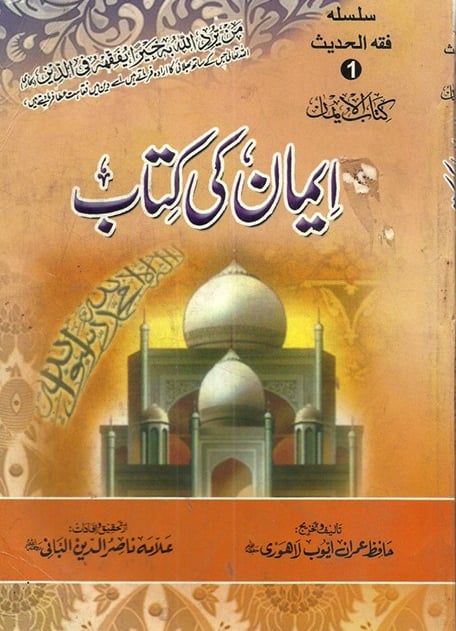
English translated summary of the urdu book "Kitab al Iman" by Shaykh Imran Ayyub Lahori
Mohammed Arif
6/8/20268 min read
Chapter 1: The Excellence of Iman
Allah is the protector and supporter of those who have Iman.
Believers are granted immense excellence and a reward that is never wasted by Allah.
Allah remains with the believers, ensuring they face no injustice or fear of loss.
Believers are promised salvation and receive special divine assistance from Allah.
The Qur'an serves as a source of glad tidings and great reward for the believers.
Allah has taken the responsibility of helping and guiding the hearts of believers.
Sincere Iman makes a person superior regardless of their social status.
True success and guidance are reserved exclusively for the people of Iman.
Allah conceals the shortcomings of believers in both this world and the hereafter.
Iman and good deeds are the most beloved and virtuous actions in the sight of Allah.
Paradise is a guaranteed promise and a divine trade for those who believe.
Iman will serve as a guiding light on the Day of Judgment to show the way to Paradise.
Even a tiny amount of Iman prevents a person from remaining in Hell forever.
No deed is accepted by Allah without the essential foundation of Iman.
Chapter 2: Characteristics of the Believers
Believers maintain firm conviction and do not allow any doubt to enter their Iman.
Believers fear only Allah and no one else.
Believers ensure their devotion and religious practices are purely for Allah.
A key trait of the Iman is the constant and abundant remembrance of Allah.
Believers exhibit complete obedience and sincere love for Allah and His Messenger.
They unconditionally accept and submit to the decisions made by Allah and His Prophet.
They prioritize the pleasure of Allah and His Messenger over all worldly desires.
In times of dispute, believers refer back to the guidance of Allah and His Messenger for a solution.
Believers perform their prayers with deep humility, focus, and devotion.
They purposefully avoid vain talk and useless activities that do not benefit their Iman.
Believers are committed to helping the poor and fulfilling their financial obligations like Zakat.
Fulfilling promises and upholding covenants are essential moral duties for a believer.
Believers show unwavering patience and steadfastness during times of poverty and hardship.
They are consistent in seeking forgiveness and dedicated to the worship of Allah.
Believers uphold divine limits and laws without showing inappropriate leniency in their implementation.
They honor their pledge to support and protect the religion of Allah.
True believers consider all other Muslims as their brothers and maintain a bond of unity.
They stay away from major sins and remain constantly mindful of Allah's punishment.
A believer's love for the Prophet exceeds their love for any other person or thing in the world.
They sincerely desire the same good for their fellow Muslims as they do for themselves.
Believers remain patient and content even when facing continuous trials and tribulations.
Truthfulness is an inseparable trait of a believer, as Iman cannot coexist with falsehood or treachery.
They live in a balanced state of hope for Allah's mercy and fear of His punishment.
A believer is focused on performing good deeds rather than engaging in empty talk or hypocrisy.
Chapter 3: The Reality of Iman
Linguistically, Iman implies providing safety and peace, as well as firm affirmation and belief.
In religious terms, Iman is the combination of heart-felt conviction, verbal confession, and physical action.
Iman is not a stagnant state; it increases with obedience and good deeds and decreases with sins and evil deeds.
While Iman (internal belief) and Islam (external submission) are related, true Iman requires both internal conviction and external practice.
The perfection of Iman is manifested through actions, and no deed is acceptable without the foundation of belief.
It is permissible for a believer to say "I am a Mu’min, InShaAllah" to avoid self-praise and express total reliance on Allah.
The Qur'an and the Sunnah confirm that Iman fluctuates based on a person’s spiritual state and commitment to worship.
A believer's Iman can vary in strength from being as firm as a mountain to as tiny as a mustard seed.
Engaging with the Qur'an and contemplating Allah’s creation are primary ways to strengthen one's Iman.
Negligence, worldly distractions, and persistent sinning are the main causes for the weakening of Iman.
Believers are ranked into three categories: those who excel in good, the moderate, and those who wrong themselves through sin.
True Iman is incomplete without sincere love for the Prophet and desiring for others what one desires for themselves.
Chapter 4: The Pillars of Iman
Iman is built upon six essential pillars: belief in Allah, His angels, His books, His messengers, the Last Day, and Divine Decree.
True belief in Allah requires affirming His existence, His sole right to be worshipped, and His beautiful Names and perfect Attributes.
Believing in Allah's Lordship (Rububiyyah) means recognizing Him as the only Creator, Provider, and Controller of the universe.
Angels are luminous, obedient beings created by Allah to carry out specific divine duties without ever disobeying Him.
Iman requires believing in all original divinely revealed books, with the Qur'an being the final, superior, and protected guidance.
Allah sent prophets to every nation to guide humanity, with Muhammad (PBUH) being the final seal of all prophethood.
Believers must maintain a firm conviction in the reality of death, resurrection, and the ultimate accountability on the Day of Judgment.
The pillar of the hereafter includes belief in the eternal rewards of Paradise and the punishments of Hell.
Divine Decree (Qadr) means everything happens according to Allah's perfect pre-ordained knowledge, writing, will, and creation.
Accepting the Divine Decree brings a believer internal peace, contentment, and steadfastness during life's trials.
Chapter 5: Explanation of the Branches of Iman
Iman is composed of various branches, encompassing correct beliefs, Islamic practices, and excellent moral character.
Islam is the only religion accepted by Allah, and it was the fundamental message preached by all previous Prophets & Messengers.
Every human being is born with a natural, inherent inclination toward the religion of Islam.
Embracing Islam is far more valuable and superior than possessing any amount of worldly wealth.
Entering Islam with sincerity serves as a divine means to erase all of a person's previous sins.
A believer must strive for steadfastness to ensure they remain in a state of Islam until their final breath.
The external practice of the Iman (Islam) is built upon five fundamental pillars that every Muslim must uphold.
Modesty and removing harmful objects from paths are practical, everyday manifestations of a person's Iman.
Feeding the hungry and spreading greetings of peace (Salam) are essential social duties for a believer.
True Iman requires honoring one's neighbors and choosing to either speak goodness or remain silent.
A vital branch of Iman is desiring the same goodness for fellow Muslims as one desires for themselves.
Believers have a moral obligation to protect others from any form of physical or verbal harm.
Maintaining excellent character and fulfilling promises are key indicators of a perfected Iman.
Iman individuals must avoid gatherings where forbidden acts occur and shun jealousy, hatred, and social boycotts.
Upholding cleanliness and adopting a lifestyle of simplicity are considered significant branches of a believer's Iman.
Chapter 6: Explanation of the Nullifiers of Iman
Nullifiers of Iman are specific actions, words, or beliefs that completely remove a person from the fold of Islam.
Associating partners with Allah (Shirk) in any form of worship is the most significant act that voids Iman.
Failing to consider polytheists as disbelievers or validating their religious paths nullifies one's own Iman.
Assisting or supporting polytheists against Muslims is considered a major breach that cancels iman.
Major hypocrisy, where one outwardly professes Islam while internally rejecting it, is a nullifier of Iman.
Turning away from the religion by refusing to learn its basics or practice it entirely voids a person's Iman.
Mocking Allah, the Qur'an, or the Prophet in any way results in an immediate exit from Islam.
Insulting or abusing Allah, His Messenger, or the religion itself is a clear act of disbelief.
Arrogance toward divine laws or rejecting the Sharia out of pride nullifies a person's submission to Allah.
Engaging in magic or approving of its practice is a grave sin that destroys Iman.
Believing in fortune-tellers or soothsayers regarding the knowledge of the unseen is a nullifier of Iman.
Hating any part of the guidance brought by the Messenger of Allah, even if one follows it, cancels Iman.
Declaring forbidden things as lawful or lawful things as forbidden against Allah's decree voids belief.
Persistent doubt in the fundamental truths of the religion is incompatible with Iman.
Acts committed under extreme and life-threatening compulsion may not necessarily result in the loss of Iman.
Chapter 7: Explanation of the Creed of Loyalty and Disavowal (Al-Wala' wal-Bara')
Wala’ signifies loyalty, love, and support, while Bara’ denotes disavowal, distancing, and enmity toward falsehood.
The creed of loyalty and disavowal is the fundamental basis and strongest bond of Iman.
A believer's primary loyalty and deepest love must be reserved exclusively for Allah, His Messenger, and fellow Muslims.
It is a religious obligation to love what Allah loves and hate what Allah hates.
Believers are strictly forbidden from taking disbelievers, polytheists, or hypocrites as close allies and friends.
True loyalty to Allah is manifested by sincerely following the Sunnah of the Prophet and supporting the Muslim community.
Adopting the customs of disbelievers or assisting them against Muslims are clear signs of compromising one's Iman.
A genuine mutual friendship between a true believer and an enemy of Islam is impossible.
Sincere loyalty to Allah and the believers brings divine protection, success, and eternal reward.
Practicing disavowal toward falsehood purifies a person's Iman and protects them from spiritual misguidance.
One must maintain a clear distinction between the people of truth and the people of falsehood in their social and spiritual ties.
Chapter 8: Explanation of Disbelief in Taghoot (False Deities/Tyrants)
Taghoot encompasses anything worshipped, followed, or obeyed in opposition to the commands and laws of Allah.
True Iman in Allah is impossible without first consciously rejecting and disbelieving in all forms of Taghoot.
The fundamental mission of every prophet was to command their people to worship Allah alone and shun Taghoot.
Disbelief in Taghoot requires believing its worship is false, hating it, and distancing oneself from it.
The correct sequence of Iman is to first clear the heart of false deities before affirming belief in Allah.
Taghoot acts as a patron for disbelievers, leading them away from divine light and into spiritual darkness.
The path of the disbelievers is defined by their efforts to struggle and fight in the cause of Taghoot.
The destruction of previous nations was frequently a direct result of their devotion to and worship of Taghoot.
Success and divine glad tidings are reserved for those who make a conscious effort to avoid Taghoot.
Chapter 9: Explanation of Miscellaneous Matters Related to Iman and Creed
Loving and respecting the Companions (Sahaba) of the Prophet is a fundamental part of a believer's Iman.
A Sahabi is defined as someone who met the Prophet while believing in him and died upon that belief.
Believing in the integrity and justice of all Sahaba is an obligatory part of the Islamic creed.
It is strictly forbidden to insult, abuse, or speak ill of any of the Prophet’s Companions.
True Iman requires sincere devotion and love for the Ahl al-Bayt (the family of the Prophet).
The four Rightly Guided Caliphs are considered the most superior individuals among all the Sahaba.
Specific belief is required regarding the ten Companions who were guaranteed Paradise during their lifetimes.
Believers should maintain a spirit of sincere well-wishing and advice (Nasihah) toward Islamic rulers.
The understanding and methodology of the Righteous Predecessors (Salaf as-Saliheen) is the best path to follow.
Adhering to the consensus of the early Muslim community protects a person from religious innovation and misguidance.
Chapter 10: Explanation of Weak Hadiths Related to Iman and Creed
The common saying to "beware of the intuition of the believer" is based on a weak narration.
Reports claiming that "Iman is not about wishes" or describing Iman as a "garment" are not authentically proven.
The idea that "Iman consists of two halves" or that "patience is half of Iman" is categorized as weak.
The popular phrase "love of one's homeland is part of Iman" lacks authentic support from the Prophet.
Narrations suggesting that "knowing oneself is the same as knowing one's Lord" have no authentic basis.
The claim that "if the Prophet had not been created, the universe would not exist" is a weak tradition.
The statement describing Allah as a "hidden treasure" before creation is not an authentic Prophetic hadith.
Reports stating that "jealousy ruins Iman" in the same way fire ruins wood are classified as weak.
The notion that "grey hair is the light or garment of Iman" is found in weak records.
Narrations claiming that "Iman and action are brothers" or that "certainty is complete Iman" are weak.
The claim that "love for Ali or the Prophet's family is the sole requirement for Iman" is found in weak chains.
Reports suggesting that "Iman is removed from a person while they are drinking" in specific wordings are considered weak here.
The idea that "Iman is a symbol represented by the prayer" is categorized among weak hadiths.
Knowledge Is Deen © 2026. All rights reserved.